
Frequently Asked Questions (FAQ)

zxcompo inductor FAQ

Take a look at some of the questions our customers often ask

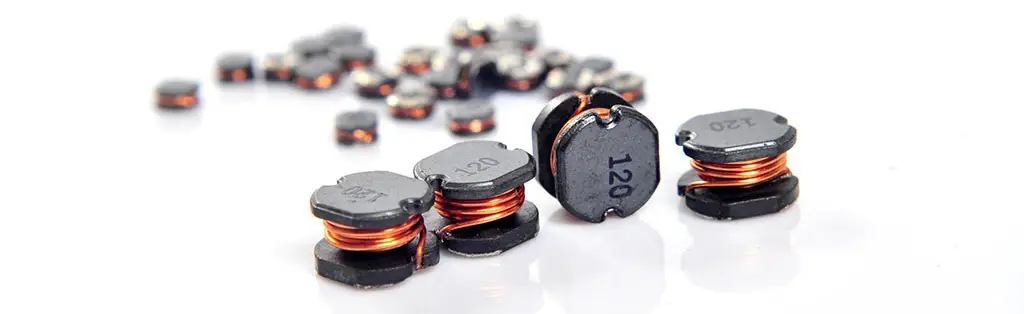
  • Inductance value and tolerance, DCR, saturation current (Isat), temperature rise current (Irms), package size, and package method.
  • The saturation current (Isat) is based on the inductance, which decreases to 30%. The current passing through the inductor is defined as the saturation current (Isat).
  • The temperature rise current (Irms) is defined as the current at which the inductor temperature reaches 40℃; once the inductor temperature stabilizes, the current at that point is the temperature rise current (Irms).
  • The storage conditions of the product in the package are: the temperature is 5-40℃, and the relative humidity is less than or equal to 70%. If taken out to use, please use the plastic bag seal to preserve it according to the above conditions, and avoid terminal (electrode) oxidation, affect the state of welding.
  • Please do not keep the product in a high-temperature, high-humidity, dusty, or corrosive gas environment.
  • We usually define the tolerance with specific letters in inductor naming, such as the following tolerances of power inductors: J: 5%; K: 10%; M: 20%; N: 30%.
  • The heat-shrink sleeve has no effect on the inductor performance, but the heat-shrink sleeve can better protect the coil and can increase the voltage resistance of the inductor. At present, we have the RI series type inductors, RI0507 inductors, and RI810 type inductors that are produced with a heat-shrink sleeve.
  • ZXcompo Inductor doesn’t have a defined rated voltage because most of the inductors are used in low-voltage DC-DC converters. For any applications in which a high-voltage is required, please contact ZXcompo.
  • The peak current in the inductor’s application circuit exceeds the inductor’s rated current.
  • For two-in-one inductor heating, the coil and core short-circuit.
  • The inductor is applied at the wrong frequency. Each core has a suitable application frequency at which loss is minimal.
  • MN-ZN inductors are used in high-voltage circuits larger than 300V. For example, manganin inductors can produce heat when used in half-bridge/full-bridge resonant circuits.
  • Shielded inductors can better protect wires, circuits and coils from external magnetic fields, as well as reduce the electromagnetic field generated by the circuit from interfering with other components of the interference.
  • In circuit diagrams, chip ferrite beads and inductors share the same symbol, yet they are distinct components. The specification for ferrite beads is measured in ohms (Ω), whereas inductors are measured in henries (H).
  • Chip ferrite beads are made of ferrite material, while inductors consist of a magnetic core and a coil. Ferrite beads convert AC signals into thermal energy; inductors store AC energy and release it gradually, thereby serving an energy-storage function. Ferrite beads are classified as energy-conversion components.
  • Chip ferrite beads are primarily used to address radiated interference and are commonly employed on signal lines; they are often required at power supply inputs in high-frequency circuits such as RF systems, oscillator circuits, and DDR SDRAM.
  • Inductors are primarily used to address conducted interference; high-frequency inductors are mainly applied in areas such as low-to-medium frequency filtering circuits and RF impedance matching.

GET A QUOTE NOW

We can design power inductors according to your requirements so that you can choose the ideal power inductor.
Thanks for your message, we will reply soon. Looking forward to cooperate with you. Keep us in touch.
zxcompo
about us - zxcompo factory banner
Power Inductors Products
guide

Wondering how to import from china to sell profitably?

We would like to offer you a great discount on your first order!

Note: Your email information will be kept strictly confidential.

Connect Alwaysx

Connect us in Whatsapp