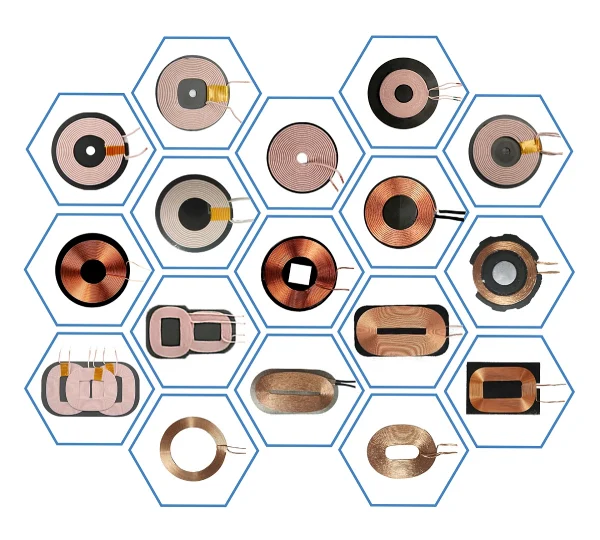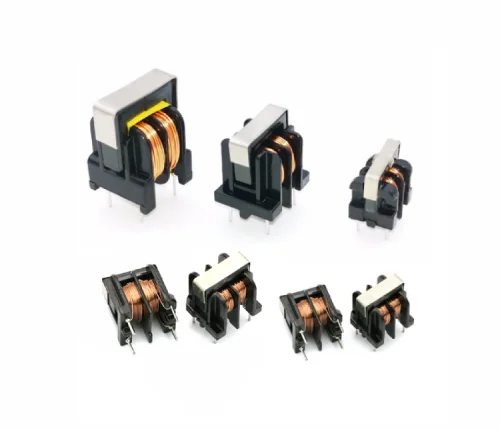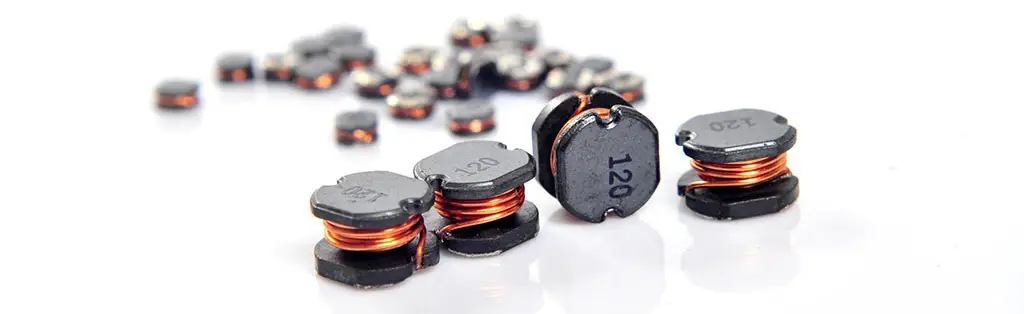
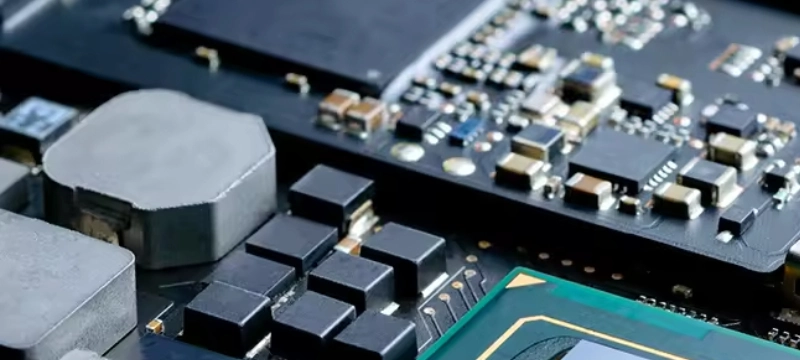
The size of an inductor depends on several factors, such as the number of coil turns, whether an iron core is used, and the core material. When choosing an inductor, you should consider parameters like the frequency, current, and voltage of the application circuit. As an essential part of electronic components, chip inductors are commonly used in various circuits. When selecting chip inductors, you must also take into account different requirements. Below, we will explain how to choose based on two aspects: inductors and chip inductors.
(★ If you want to know more information, you can refer to the following article: •The Difference Between Shielded Inductors and Unshielded Inductors | Zxcompo Inductor Factory)
Choosing the right inductor size is a multi-factor process. Here are some key points to help you choose the right inductor size:
1. Rated current: Determine the maximum current the inductor needs to handle. The selected inductor must be able to operate at the rated current for a long time with some margin.
2. Inductance value: Choose the right inductance value based on the circuit design requirements. The inductance value affects the circuit’s performance, such as filtering, frequency response, etc.
3. Size and power density: Consider the physical size of the inductor; it needs to fit on the board. Also consider power density, which is the amount of power it can handle per unit volume. Generally, larger inductors have higher power density and better heat dissipation.
4. Operating frequency: Choose an inductor based on the operating frequency of the circuit. High-frequency applications may require an inductor with lower losses and a higher self-resonant frequency.
5. DC resistance (DCR): The DC resistance of an inductor affects its power dissipation and efficiency. Inductors with low DC resistance (DCR) generate less heat at the same current.
6. Saturation current: Choose an inductor with enough saturation current to ensure that the inductance value does not drop significantly at the maximum current.
7. Thermal characteristics: Consider the thermal characteristics of the inductor, including its thermal resistance and maximum operating temperature. Make sure the inductor does not overheat at the expected ambient temperature.
8. Package type: Select the appropriate package type, such as surface mount technology (SMT), through-hole technology (TH), or other special packages, based on the layout and assembly requirements of the circuit board.
9. Cost and availability: Consider cost and supply chain stability while meeting technical requirements.
10. Here are some specific steps:
a. Determine application requirements: Analyze the circuit’s function and clarify the role of the inductor, such as filtering, energy storage, or choking.
b. Check the data sheet: Review the inductor’s datasheet to understand its technical specifications, including rated current, inductance, size, DCR, and saturation current.
c. Simulate and calculate: Use circuit simulation software to model and evaluate the inductor’s performance under various conditions.
d. Prototype testing: If possible, build a prototype and conduct testing to verify if the inductor’s performance meets the requirements.
e. Consider redundant design: For critical applications, consider using multiple inductors or selecting higher-specification inductors to enhance reliability.
Through the above steps, you can choose the right inductor size to meet the circuit performance requirements and adapt to physical and environmental conditions.
However, if you want to choose the specifications of the chip inductor in detail, you need to consider many factors, including size, inductance value, current capacity, operating frequency range, and specific application scenarios. Here are some specific selection guidelines:
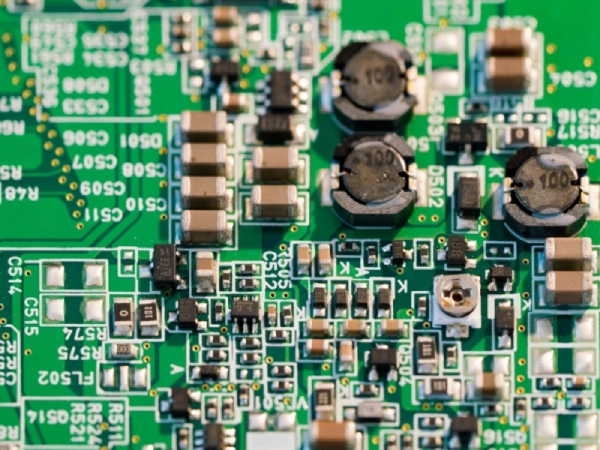
1. Size
General size: The length and width of a chip inductor are usually measured in millimeters (mm), and common sizes include 0402, 0603, 0805, 1206, etc. These numbers represent the length and width of the inductor; for example, 0402 means the length is 0.4mm and the width is 0.2mm (the actual size may vary slightly, but is basically the same).
Height: The height of a chip inductor is also usually measured in millimeters (mm), and the specific height depends on the type and size of the inductor.
Application scenarios:
0402 size chip inductors are suitable for microcircuits and small electronic devices, such as mobile phones, digital cameras, etc. Due to their small size, they are usually only suitable for smaller circuits, the inductance value is generally not more than 10μH, and the current is relatively small.
0603 size chip inductors are suitable for general electronic devices, such as laptops, TVs, etc. The inductance value is usually between 10μH and 100μH, and the current increases accordingly.
0805 size chip inductors are suitable for general electronic circuits, controllers, etc., the inductance value is usually between 100μH and 1mH, and the current increases accordingly. Due to their large size, they can withstand larger currents.
1206 size chip inductors are suitable for high-power electronic circuits, industrial controllers, etc., and their inductance value is generally between 1mH~10mH, and the current is also large.
2. Inductance value
Choice of inductance: The size of inductance depends on the number of turns of the inductor coil, the winding method, the presence or absence of a magnetic core, and the material of the magnetic core. When selecting the inductance, it needs to be determined according to the specific needs of the circuit.
Allowable deviation: The allowable error value between the marked inductance and the actual inductance. Choose inductances of different precisions according to application requirements.
3. Current carrying capacity
Rated current: The rated current refers to the current when the product equipment runs at rated power at rated voltage. When selecting a chip inductor, make sure its rated current meets the current requirements in the circuit.
Overcurrent protection: If the operating current exceeds the rated current, the inductor may burn out. Therefore, the maximum current value in the circuit must be considered when selecting, and an appropriate margin must be left.
4. Operating frequency range
Frequency characteristics: The operating frequency range of the chip inductor refers to the frequency range in which it can work normally in the circuit. Beyond this range, the performance of the inductor may change, affecting the normal operation of the circuit.
Selection advice: Select a suitable chip inductor according to the operating frequency of the circuit, and ensure that it has good performance within the required frequency range.
5. Specific application scenarios
Power inductors: For power circuits and some occasions that require high power and small size, you can choose power inductors with high power, high saturation current, low impedance, and miniaturization.
Shielded inductors: For occasions that require high current, low DC resistance, and strong anti-interference ability, you can choose chip shielded inductors.
Stacked inductors: For occasions with low power, closed circuits, no mutual interference, suitable for high-density installation and signal processing, you can choose stacked inductors, such as 0402, 0603 and other specifications.
NR magnetic rubber inductors: For occasions that require strong resistance to drop impact, good durability, low leakage, and strong anti-EMI ability, you can choose NR magnetic rubber inductors.
In short, when choosing the specifications of chip inductors, you need to consider multiple factors such as size, inductance value, current carrying capacity, operating frequency range, and specific application scenarios. Through reasonable selection, you can ensure that the chip inductor performs best in the circuit.
In the competitive electronic component market, Zxcompo’s SMD power inductors stand out for their high performance, reliability, and global support network. If you are looking for a reliable inductor solution, consider Zxcompo to take your design project to the next level. Simply contact us for a sample: sales@ZXcompo.com.
Take action now! Visit Zxcompo’s official website to explore more product specifications and application cases, and you will find that choosing Zxcompo is an investment you will never regret. Zxcompo will help you succeed!