Multilayer ceramic capacitors (MLCCs) are essential electronic components found almost everywhere in modern electronic devices. However, with so many MLCC models available on the market, how do you choose the right one? Today, we’ll uncover the truth by analyzing key specifications and real-world examples to help you on your design journey!
Why Is Choosing The Right MLCC So Important?
In today’s rapidly evolving electronics industry, MLCCs (multilayer ceramic capacitors) have become a critical component in electronic product design. However, selecting the right MLCC is a crucial task that not only impacts product performance but can also determine the success or failure of a project. So, why is choosing the right MLCC so crucial? Let’s explore the underlying reasons.
(★ If you want to know more about SMD capacitors, please refer to this article: •Multilayer Ceramic Capacitor Selection Guide)
First, the selection of MLCC directly affects product reliability. As a key component in electronic circuits, MLCCs perform essential functions such as providing a stable power supply, reducing noise, and storing energy. Improper matching, capacitance, or quality of the selected MLCCs can not only lead to circuit failure, but also shorten device lifespan and increase maintenance costs. For example, in high-frequency applications, low-quality or mismatched MLCCs can cause signal distortion and, in severe cases, even complete circuit failure.
Secondly, choosing the right MLCC can significantly improve product efficiency and performance. Different application scenarios have stringent requirements for MLCCs. For example, in scenarios requiring efficient energy transmission, high-quality MLCCs can reduce power loss and improve overall device performance. Choosing the wrong MLCC can lead to unstable power supply, overheating, and other issues, impacting the end-user experience.
Finally, choosing high-quality MLCCs can also reduce long-term costs. While high-quality MLCCs may initially cost slightly more than standard products, in the long run, they can significantly reduce equipment repair costs and downtime, and avoid reputational risks associated with product quality issues. Especially in areas where reliability is paramount, such as automotive electronics and medical devices, selecting the right MLCC is not only a technical requirement but also a responsibility.
So, how do you choose the right MLCC? In practical applications, it’s important to comprehensively consider key parameters such as capacitance, withstand voltage, and temperature characteristics, and select reputable brands with stable supply chains. Zxcompo’s suppliers carefully test product performance, laying a solid foundation for project success.
Key Parameters for Selecting Multilayer Ceramic Capacitors (MLCCs)
In electronic design, selecting high-quality multilayer ceramic capacitors (MLCCs) is crucial to ensuring stable performance. But did you know that blindly selecting a multilayer ceramic capacitor (MLCC) can lead to circuit failure? This article will explain several key parameters that must be considered when selecting multilayer ceramic capacitors (MLCCs) to help you avoid misguided choices.
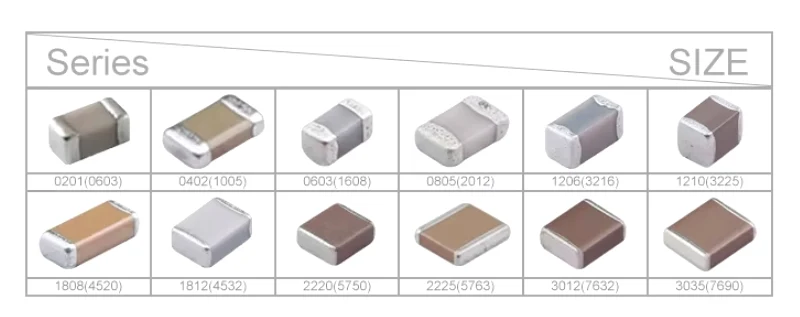
Capacity and Voltage: A Critical First Step
An MLCC’s capacitance determines the amount of charge it can store, while its voltage reflects its upper voltage rating. When selecting an MLCC, the actual voltage should not exceed 50%-70% of the nominal voltage to ensure safety. This is especially true at high frequencies, where the actual capacitance may decrease. Choosing the appropriate voltage margin is crucial.
Temperature Coefficient: The Hidden Factor Determining Capacitor Stability
Different applications require varying tolerance to temperature fluctuations. For example, MLCCs with an X7R temperature coefficient maintain excellent performance over a wide temperature range of -55°C to 125°C, making them ideal for industrial applications. Y5V, on the other hand, has poorer temperature characteristics and is only suitable for applications requiring less precise accuracy. Choosing the appropriate temperature coefficient based on actual needs can effectively avoid future maintenance issues.
Equivalent Series Resistance (ESR) and Self-Resonant Frequency (SRF): Improving Circuit Efficiency
ESR and SRF are important parameters when selecting MLCCs for high-frequency applications. The lower the ESR, the less energy loss in the MLCC; the higher the SRF, the better the capacitor’s performance at high frequencies. Understanding these parameters is particularly important for RF or high-speed digital circuits.
Size and Package: Don't Ignore Physical Limitations
The size of an MLCC not only affects PCB layout space but also determines the performance of the capacitor itself. Larger size generally results in higher capacitance and voltage, but also means less PCB layout flexibility. When selecting an MLCC, balancing performance and design space is crucial.
Finally, remember that selecting an MLCC isn’t just a matter of looking it up in a table; it requires a comprehensive consideration based on the specific application scenario and design goals.
Multilayer Ceramic Capacitor Examples
In the design of modern electronic devices, the choice of components often determines the upper limit of product performance. Multilayer ceramic capacitors (MLCCs) are a vital component for electronics engineers. Do you know how important these tiny MLCCs are in our daily lives? Today, we will explore their wide range of applications and the technological secrets behind them through several examples.
Case 1: Core Components in Smartphones
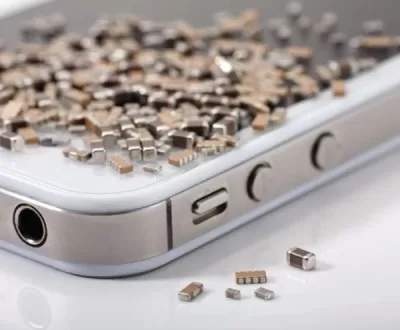
In the smartphone industry, each device typically uses hundreds of multilayer ceramic capacitors. Their primary functions are filtering and decoupling, stabilizing the voltage supply, and reducing noise. For example, multilayer ceramic capacitors (MLCCs) placed close to the processor help ensure stable chip operation and minimize electromagnetic interference, thereby ensuring smooth operation. Especially with the widespread adoption of 5G technology, smartphones have higher requirements for high-frequency signals, further driving demand for low-ESR (equivalent series resistance) MLCCs.
Case 2: Electric Vehicle Energy Storage Systems
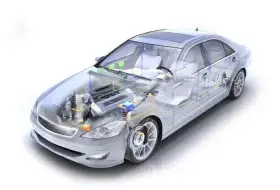
Multilayer ceramic capacitors are becoming increasingly common in electric vehicles. In battery management systems (BMS), MLCCs, with their excellent temperature stability and high-voltage resistance, ensure smooth energy transfer between battery cells. For another example, in fast-charging technology, MLCCs help achieve electromagnetic compatibility at higher frequencies, ensuring safety and efficiency during the fast-charging process.
Case 3: Upgrading Smart Home Devices
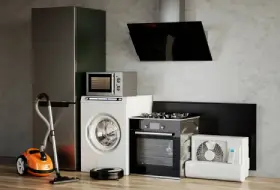
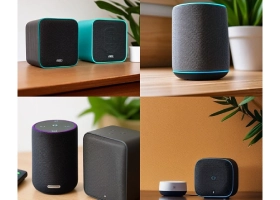
With the growing popularity of smart home devices, the performance of devices like autonomous vacuum cleaners and smart speakers now relies on MLCCs. In these miniaturized devices, MLCCs have become a circuit designer’s “secret weapon” thanks to their excellent volume density and high reliability. They not only save board space but also improve overall power efficiency.
Case 4: Selecting Multilayer Ceramic Capacitors (MLCCs) for Smart Speakers
Using a smart speaker as an example, the design process requires consideration of audio signal stability and device durability. In actual testing, we selected a 10μF, 16V X7R multilayer ceramic capacitor (MLCC) as the power supply filter capacitor for the audio output circuit. This capacitor not only offers stable performance but also features extremely low equivalent series resistance (ESR), significantly reducing circuit noise interference.
The above analysis demonstrates that multilayer ceramic capacitors have become a fundamental component of modern electronic design, widely used in various fields, including smartphones, electric vehicles, and smart homes. Have you fully utilized the potential of MLCCs in your own projects? Please share your thoughts or success stories in the comments section to discuss how to further optimize your design!
Conclusion: What's your next choice?
Choosing the right MLCC requires not only understanding key parameters but also considering the actual application requirements. We hope you find the analysis and examples in this article helpful! If you have further questions about MLCC selection, please leave a message and we will provide more detailed guidance!

Finally, if you’re looking for magnetics or passive electronic components, ZXcompo is a high-quality supplier of magnetics and electronic components that comply with ROHS, REACH, and ISO 9001 quality standards. You can also order free test samples (inductors, capacitors, transformers, filters, etc.) from ZXcompo. Our products are widely used in automotive, telecommunications, consumer electronics, and other fields, and we have over 20 years of experience in this field. If you have any questions, please contact us at sales@ZXcompo.com to request a sample.