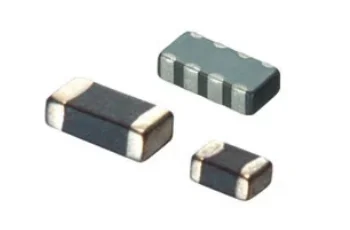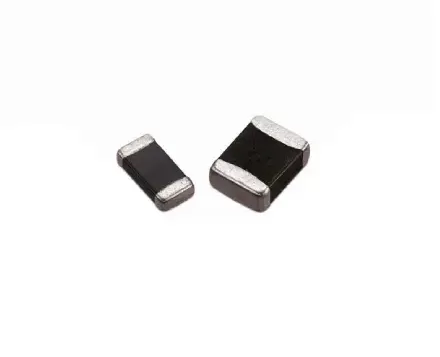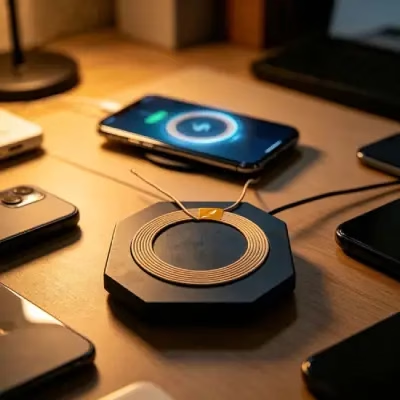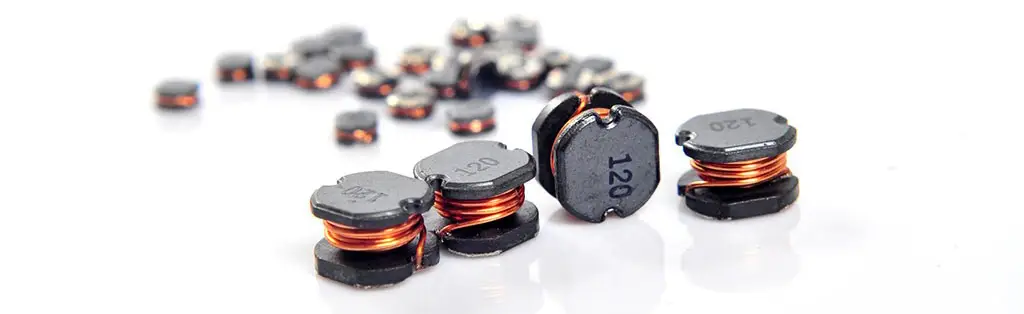
For designers of small home appliances and global procurement teams handling small-batch orders, surface-mount device (SMD) ferrite beads offer a highly cost-effective solution for electromagnetic interference (EMI) suppression, fully compatible with surface-mount technology (SMT) manufacturing processes. These components help products successfully pass CE, FCC, and various local electromagnetic compatibility (EMC) certifications—all without the unnecessary costs associated with over-specifying industrial-grade components. Tailored specifically for small home appliance projects, this guide covers a range of practical application scenarios, essential selection criteria, and valuable recommendations for cost optimization.

Core Application Scenarios in Small Home Appliances
SMD ferrite beads are deployed at strategic locations within virtually all categories of small household appliances to address specific EMI challenges associated with different types of circuits:
For small, motor-driven household appliances—such as air fryers, portable blenders, compact robotic vacuums, and mini food processors—incorporating a high-current surface-mount device (SMD) ferrite bead (in an 0805 or 1206 package) in series with the DC motor’s power line can be highly beneficial. These ferrite beads suppress high-frequency pulse noise generated by the rotation of the motor brushes, thereby preventing microcontroller (MCU) lock-ups and ensuring that radiated emissions remain within the limits mandated by relevant regulations.
Heating Control Equipment: In products such as mini electric ovens, desktop humidifiers, portable electric heating cups, and facial steamers, surface-mount device (SMD) ferrite beads are employed at the input side of the PTC heating modules. These ferrite beads filter out high-frequency harmonics generated during the switching process of thyristors, thereby preventing accidental triggering of touch-sensitive buttons and resolving issues such as the appearance of garbled characters on LED displays.
Small smart wireless devices—such as compact smart aroma diffusers, Bluetooth body fat scales, and mini smart plugs—typically incorporate ultra-miniature surface-mount device (SMD) ferrite beads (commonly in 0402 or 0603 package sizes) near the power pins of their Bluetooth/Wi-Fi antennas. These ferrite beads suppress noise conducted along the circuit, preventing it from interfering with the reception of wireless signals. This significantly enhances connection stability, ensuring robust performance even in home environments with complex radio frequency (RF) conditions.
Small household appliances powered via USB—such as portable bottle warmers, desktop hand warmers with USB output ports, and mini desktop fans—incorporate surface-mount device (SMD) ferrite beads on both the USB data pins and power pins. This design not only ensures that the products meet the fundamental electromagnetic compatibility (EMC) requirements established by the USB-IF, but also effectively prevents communication errors that could otherwise occur when the devices are connected to external equipment, such as mobile phones or power banks.
3 Non-Negotiable Selection Rules for Small Home Appliance Projects
Unlike applications in the automotive or medical sectors, small household appliances do not require ferrite beads that meet the AEC-Q200 standard or hold medical-grade certification. By following these three simple principles, you can not only satisfy 99% of your design requirements but also reduce component costs by 60% (compared to high-end products from well-known brands):
1. Opt for standard 0603/0805 packages: these common sizes are well-suited for the compact PCBs found in most small household appliances; furthermore, they are widely available in stock globally, with unit prices as low as $0.01.
2. For such applications, components with an impedance value between 60Ω and 600Ω at a frequency of 100MHz should be selected. This range effectively covers the noise spectrum from 10MHz to 1GHz—a frequency band that accounts for 95% of electromagnetic compatibility (EMC) issues in small household appliances. Given this, there is no practical benefit to using high-impedance components with values exceeding 1 kΩ.
3. Maintain a 20% current margin: Ensure that the ferrite bead’s rated DC current is at least 20% higher than the peak startup current of the motor or heating element to prevent magnetic saturation; once magnetic saturation occurs, noise suppression performance drops significantly. Keep the DC resistance (DCR) below 0.15Ω to avoid unnecessary voltage drops, which could otherwise lead to a reduction in the device’s operating time.
Top Cost-Effective Universal Models for Mass Production
These mainstream models have been widely adopted by numerous small home appliance brands globally. They offer reliable performance, short lead times, and very low minimum order quantities (MOQs), making them ideal for small-batch production requirements:
FengHua CBG201209U221T: 0805 package, 220Ω @ 100MHz, 2A rated current. The industry standard choice for air fryer and mini blender motor power line filtering.
Sunlord PZ0603D121-R45TF: 0603 package, 120Ω @ 100MHz, 500mA rated current. Ideal for filtering power pins of main control MCUs in compact smart home devices.
Murata BLM15AG100SN1D: 0402 package, 10Ω @ 100MHz. Perfect for ultra-space-constrained portable small home appliances, fully meeting basic global EMC certification requirements.
All these models are available for direct procurement from a Chinese surface-mount device (SMD) ferrite bead manufacturer, with full product specification sheets provided. Lead times are as short as 3-7 days, and the minimum order quantity (MOQ) is as low as 100 units. These products are an ideal choice for small to medium-sized overseas home appliance brands looking to reduce their bill of materials (BOM) costs without compromising electromagnetic compatibility (EMC) performance.