Have you ever wondered how common-mode chokes effectively reduce electromagnetic interference without sacrificing device performance? Electromagnetic interference (EMI) has always been a significant challenge that engineers must face in modern electronic devices.
A Common Mode Choke (CMC)—also known as a common mode inductor—is an electronic component specifically designed to suppress common mode electromagnetic interference (EMI). It is widely utilized in fields such as power supplies, communication systems, automotive electronics, and high-speed signal interfaces, with the aim of enhancing a system’s electromagnetic compatibility (EMC).
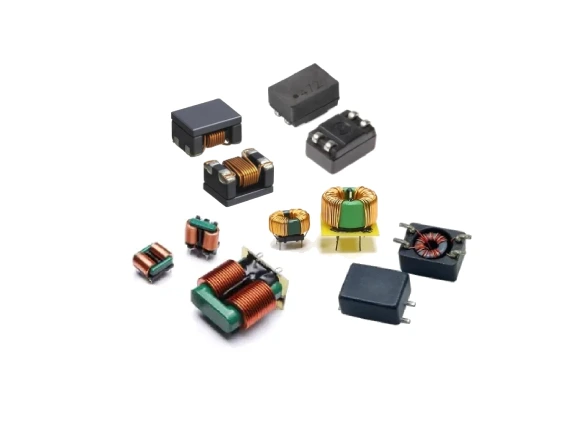
Why Are Common Mode Chokes So Important?
In today’s increasingly complex electronic landscape, this unassuming little component plays a truly critical role. Whether it’s smart home devices, industrial automation equipment, or communication equipment, common-mode interference can affect the devices, ranging from reducing performance to causing them to malfunction. The use of common-mode chokes, however, offers an effective means of preventing these issues.
Common Mode Chokes Offer the Following Key Advantages:
1. Efficient Common-Mode Noise Suppression: By canceling out noise currents originating from various directions, it minimizes the impact of interference signals on the device.
2. Signal Integrity Maintenance: It does not interfere with the normal transmission of differential-mode signals, thereby ensuring the proper operation of the device.
3. Compact and Lightweight: Thanks to advancements in manufacturing technology, common-mode chokes can now achieve extremely miniaturized dimensions—while still maintaining superior performance—making them an ideal choice for a wide range of miniaturized electronic devices.
Common Mode Choke Core Structure
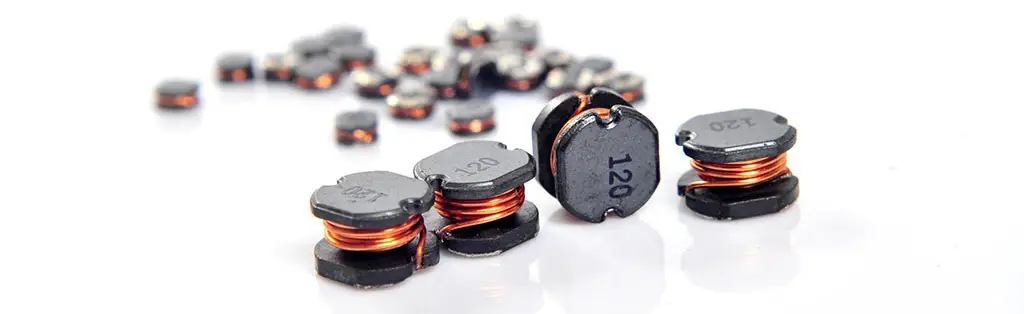
– Consists of two coils—each with an equal number of turns and wound in opposite directions—symmetrically wound onto a single high-permeability magnetic core (typically ferrite, such as manganese-zinc or nickel-zinc material).
– Common package types include:
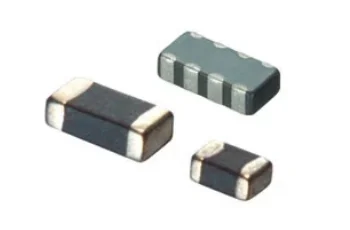
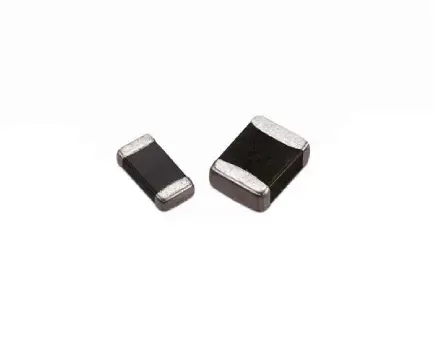
– Surface Mount (SMD): Suitable for high-density PCB layouts.
– Through-Hole: Commonly used in high-power applications.
Common Mode Choke: Operating Principle
– For common mode signals (i.e., noise currents flowing along two conductors in the same phase and direction):
– The generated magnetic fields align and superimpose, thereby creating an enhanced magnetic flux; this presents high impedance characteristics, effectively suppressing common mode noise.
– For differential mode signals (i.e., useful signals or power supply currents flowing in opposite directions):
– The generated magnetic fields cancel each other out, causing the magnetic flux to approach zero; this presents negligible impedance, thereby allowing the signals to pass through with virtually no attenuation.
Key Application Scenarios for Common Mode Chokes
– Switching Power Supplies: Filtering out common mode noise at both the input and output terminals.
– High-Speed Data Interfaces: Such as USB, HDMI, Ethernet, CAN bus, etc., used to suppress radiated interference generated by signal lines.
– Automotive Electronics: Compliant with the AEC-Q200 standard; applied in automotive Ethernet, sensors, and similar fields.
– Medical Equipment, Industrial Control, and Aerospace: Ensuring signal integrity and system stability.
(★ If you want to know more about common-mode chokes, please refer to this article: •Where Are Common-Mode Chokes Used in DC Power Lines?)
How to Select the Right Common Mode Choke?
– Operating Frequency Range: Ensure that the choke’s frequency response covers the actual operating frequency band of the device.
– Current-Carrying Capacity: Select a product capable of handling the required current based on the device’s power supply requirements.
– Impedance Characteristics: Select a component with the optimal impedance value based on the frequency range of the interference signals.
Key Performance Parameters
– Common Mode Inductance: Typically ranges from the µH to mH level (e.g., 80 µH to 1000 µH).
– Rated Current: Ranges from tens of mA to several amperes or even higher (e.g., the Laird CM2545X171R-10 features a rated current of up to 10 A).
– Impedance Characteristics: Must exhibit high impedance within the target interference frequency range (e.g., 10 MHz–100 MHz; for instance, an impedance of 700 Ω at 100 MHz).
– DC Resistance (DCR): The lower, the better, to minimize power loss.
– Core Material Selection:
– Manganese-Zinc Ferrite (Mn-Zn): Suitable for the 100 kHz–1 MHz frequency range.
– Nickel-Zinc Ferrite (Ni-Zn): Suitable for high-frequency applications (> 1 MHz).
Typical Product Examples (Mainstream Products in 2026)
– TDK ACT1210G-800-2P: Suitable for Automotive Ethernet; 80 µH (@ 100 kHz), 70 mA; operating temperature range of -40°C to +125°C; AEC-Q200 certified.
– Murata 50105AC: 1000 µH, 700 mA.
– Würth Elektronik MID-D11: Suitable for LED drivers and switching power supplies.
In summary, common-mode chokes are an indispensable tool in modern electronic devices. By selecting and using them correctly, you can improve device performance and reduce interference risk, helping your technical projects reach the next level.